Entries in Howard Barbanel (36)

Friday
Nov222013

The Zeitgeist


A Kid’s Memory of November 22, 1963:

The World that Was and is No More.


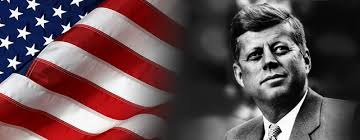
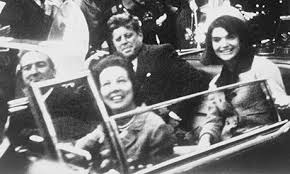
I was five years old on Friday, November 22, 1963, the day President John F. Kennedy was assassinated. Even we kids could perceive the paradigm shift that took place as a result of that horrendous event and recall the somber and mournful tone of the next few days. I was just a year younger than Caroline Kennedy.

My parents and I were living a Mad Men kind of life on Manhattan’s Upper East Side. Like JFK, my dad served in the Navy in World War II (but my father was younger and not an officer) and like Don Draper, he wore those gray flannel suits with skinny ties. Like Jacqueline Kennedy, my mother was pretty, slim, stylish and had jet black hair that she wore in various iterations of the First Lady’s coiffures. In the summer we went on vacations to Cape Cod and the Hamptons. My family was fully a part of the New Frontier.

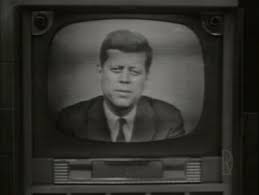
The first tip-off that something extraordinary had happened was the disappearance from late afternoon television of all the violent and goofy visual fare that we kids ingested before dinner. No Three Stooges, No George Reeves’ Superman, No Looney Tunes’ cartoons featuring exploding devices from the Acme Company. TV was all news all the time at a time when that kind of programming was previously non-existent. The adults were transfixed by the news coverage for the next few days and it seemed like a pall had descended on all the grownups.

It is said that America changed on that day and they’re right. The 50s probably ended on that Friday afternoon in Dallas. In the coming months and years everything really did change. Music changed. Clothing, fashions and hairstyles changed radically. American sensibilities changed. The trajectory of November 22, 1963 would propel us towards the tumultuous 60s and our modern era.

The world of 1963 was a much simpler time without computers, portable phones of any kind, a time without color television (for most of us) or any way to record a show and play it back – and only a few channels to watch, not 200 or more of them; A time of cars and homes without air conditioning; a time without ATM machines – if you ran out of cash on the weekend you were flat out of luck because no one had credit cards either. It was a time when stores were closed on Sundays and most Sundays you saw your extended family who all lived somewhat nearby. It was a time when work really was between 9 and 5 and somehow without working 50-60 hours per week and without typewriters that corrected, without photocopy machines and without calculators, people built things, deals were done and money made.

Maybe it was because I was so young in 1963, but compared to today, it seemed as if so much of the world was young then. People weren’t regularly living into their 80s and 90s. Our parents were young and had us young. The Baby Boom had turned out legions of kids and they were swarming everywhere. No one made play dates in the 60s, you just bounded out of your house and tons of kids could be found in the street or at the playground. You ran-off to play outside for hours on end and no one worried you might be abducted or molested. People were courteous and formal. You addressed people as “Mr.,” “Mrs.” or “Miss” if you weren’t very close to them – and children never called adults by their first names. You got dressed up to go to the movies, to a restaurant or to the theater – even to take a trip on a plane.

In 1963 we were also faced with the very real specter of Armageddon and the Cold War along with the reality of so many diseases that could end our lives in an untimely fashion for which cures or manageability have been found today.

Like Rip van Winkle, I look around today 50 years after November 1963 and can barely recognize the American landscape compared to the way it was then. How much more bewildered and bemused must people over 70 be with America today. Twenty-five years ago most Americans were alive when JFK was shot and could recall where they were that day. Now on the 50th Anniversary, most Americans here were not born by 1963 and that 60s world is fading slowly into the mists of history in that gauzy way my generation probably thinks of the 20s, 30s and 40s.

Thankfully, no matter the intense acrimony and polarization in Washington these days, we’re not assassinating our Presidents. If the biggest challenge we face today is the nuances of health insurance and not the end of mankind in a nuclear holocaust, then we’re probably doing pretty well. That life expectancy has soared and infant mortality plummeted, that our material comforts and conveniences are unparalleled in the history of mankind means we’ve made a lot of progress since November of ’63. JFK who spoke often about the world of tomorrow, tragically, didn’t get a chance to see any of it.
 

Wednesday
Oct162013

The Zeitgeist


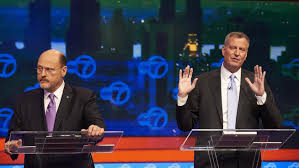
Joe Lhota (left) and Bill de Blasio mix it up on WABC debate


Lhota Dead on Arrival for Televised Mayoral Debate;

Historic GOP Loss in the Offing.

On Tuesday evening October 15th Bill de Blasio hammered in the nails on Joe Lhota’s coffin. In a televised debate on WABC Channel 7, de Blasio was animated, forceful and forthright while continually tarring Lhota with the brush of “Republican trickle-down economics,” “Tea Party extremism,” “Giuliani Administration divisiveness” and as a shill for “Bloombergian corporate welfare.” De Blasio continually rebutted anything Lhota had to say even if de Blasio wasn’t supposed to be speaking. Lhota was so painfully polite that de Blasio always got in the last word and the last jab.

Joe Lhota, the Republican candidate for Mayor of New York never once turned to look de Blasio in the eye, allowed all charges, slights and insults to go un-refuted and unchallenged and never went on the offensive calling de Blasio a continuation of the David Dinkins administration since de Blasio’s City Hall experience was working for that former mayor. Lhota never raised the ominous specter of a return to those crime-filled days nor did he ridicule any of de Blasio’s proposals.

Lhota went out of his way to portray himself as the candidate of change while de Blasio successfully boxed him in as the candidate of continuity. Instead of vigorously defending the last 20 years of Republican control of City Hall, Lhota was trying to have his cake and eat it too, distancing himself while gingerly embracing a few GOP policies. A lot of New Yorkers are happy with how things have gone since 1993 but the only way you’d know Lhota was the Republican standard-bearer was hearing it from de Blasio.

Back in 2009, 1,550,000 of the more than eight million residents of New York City came out to vote in that year’s mayoral contest between the incumbent Michael Bloomberg and his Democratic challenger Bill Thompson.  The Board of Elections shows 4,366,746 registered voters in the city limits as of April 1, 2012.    Not a particularly high turnout last time around. Back in 1993 in the supercharged race between the incumbent David Dinkins and his challenger Rudy Giuliani nearly 1.9 million people voted. Voter apathy tends to breed low turnouts as in 2009. Turnout has been declining steadily for decades. From 1932 until 1969 well over 2.2 million people voted each time.

Thanks to the perception that the 2013 race is a fait accompli it is fair to assume that New Yorkers won’t be streaming to the voting booths. By “fait accompli,” I mean all the recent polls showing GOP candidate Joe Lhota getting trounced by the Democratic nominee Bill de Blasio. In the last Quinnipiac poll conducted at the end of September int margin that points to a mauling of historic proportions. If we take the 2009 voter turnout as an estimate for 2013 that would mean more than 1.1 million votes for de Blasio and a mere 325,000 for Lhota. For Lhota that would be fewer votes than there are registered Republicans, a rare feat given how few admitted Republicans there are in Gotham.

You’d have to go back all the way to the Koch years where Ed slaughtered the placeholder GOP candidates to find a more dismal looking picture for the GOP. In 1977 Roy Goodman only garnered 59,000 votes (Mario Cuomo got 588,000 on the Liberal Party line). In 1981 Koch ran as both a Democrat and Republican and in 1985 his Republican challenger only took 102,000 votes. That Joe Lhota seems to be OK with doing little better than Roy Goodman in ’77 rather than winning is a big part of the problem. No fight. No passion. Lhota just wants to be loved and cuddled. His pushing of himself so far away from the embrace and legacy of Rudy Giuliani is reminiscent of Al Gore’s similar strategy vis-à-vis Bill Clinton in 2000. We know how well that worked out for Gore.

The Lhota people are running a “sunny day in the Emerald City” type of ad campaign. There’s nothing to fear, nothing to worry about because like de Blasio, Lhota is pro-Choice. De Blasio is for Gay marriage, so is Joe; lo and behold, like de Blasio, Lhota supports decriminalizing marijuana. Candidate differentiation? Lhota wants to cut spending and not raise taxes but in the Lhota TV spot that got ridiculed by media critics everywhere, this one policy difference comes more than halfway into the commercial. At the end of his spots it’s all about “Democrats agree that Joe is New York.” The problem here is that you can really be a bona fide New Yorker and even be liked for it but yet give the voters no reason to support you. That you’re portraying yourself as a moderate Democrat? There already is a candidate from that party. That you “are New York”? So what, so are eight million other people. Is de Blasio not a New Yorker? Who cares?

Being pro-choice or pro-marijuana are not even issues that might mean something to Democrats and Independents to help sway their votes. The issues that matter are first and foremost public safety, then schools, then jobs. In the safety sphere, two cases in point are that of retaining Ray Kelly as Police Commissioner and Stop and Frisk. Lhota would keep Kelly, de Blasio would dump him but there’s nary a peep from the Lhota people about it. Stop and Frisk? Again on different sides of that issue but you’d never know it. Charter Schools? Lhota wants to keep them, de Blasio is opposed to them as elitist and diverting resources away from the general school population. Jobs? De Blasio wants to stop subsidizing businesses that locate or agree to stay here via tax breaks and subsidies. Lhota is on the other side of this, but, again, Lhota makes no forceful case for its necessity in attracting and retaining jobs. Is there any campaign targeted to public school parents? Nope. In Lhota-land the predominantly Democratic electorate can’t handle the tough issues. It’s more important that “Joe is New York,” whatever that means.

A kid-glove campaign without being in the least bit pugnacious won’t work in a tough town like New York. For the last 20 years New Yorkers elected Republican mayors, but Guiliani and Bloomberg were alpha dogs (although different stylistically). Absent a campaign that portends a return to the 1989-1993 chaos when New York was careening towards becoming Detroit if a “Democrat with a capital D” is put in Gracie Mansion, there is nothing to motivate “Democrats with a lower-case D” to vote GOP. And make no mistake, fear is a powerful motivator. New Yorkers also respect attitude, not passivity and Mr. Lhota’s full court press of passivity was on full display in Tuesday evening’s debate which is why the candidate with more passion, a clearer sense of who he is and a bigger vision will undoubtedly triumph on November 5th and right now that isn’t Mr. Lhota.


Thursday
Jun202013

The Zeitgeist


James Gandolfini: As Important as Brando in the Fermament of Fictional Mafia Bosses

Note: This appeared originally on June 20, 2013 in The Huffington Post.

We now know how The Sopranos really ends -- Tony is taken out by the celestial capo di tutti capi. The series finale was left ambiguous but the boss of bosses up above doesn't go for unresolved endings, so ascending to heaven is New Jersey native James Gandolfini, who at 51 definitely went way before his time.

Gandolfini generally played heavies in film and television not because he was a big guy but because he was a heavyweight actor. The hugeness of his screen presence was most significantly manifested in his eight-year portrayal of Jersey mob boss Tony Soprano. The Sopranos created a new paradigm for dramatic television and made HBO must-see TV. Gandolfini's work was recognized by his peers by repeatedly winning the prime-time Emmy award for Best Actor in a Dramatic Series along with similar honors from the Screen Actors Guild. He also took home awards from the Golden Globes and the American Film Institute, and was nominated just about every year that he didn't win.

The Sopranos, and Gandolfini's role as Tony, was every bit as important to the oeuvre of American mafia celluloid fiction as were Marlon Brando's Don Corleone and Al Pacino as Michael in The Godfather. Aside from that Coppola epic, The Sopranos probably had the most impact on American popular culture as it relates to Italian-American gangsters. Gandolfini was brilliant as Tony Soprano precisely because he seemed to embody and then channel his New Jersey Italian ethnicity thoroughly and completely.

Millions would tune in on Sundays at 9:00 p.m. to learn sage advice on how to run a complex business organization, how to manage recalcitrant personnel, how to fend-off federal regulators (in the form of law enforcement) and how to deal with high levels of stress. It was the quintessential primer on executive management tips for the new millennium. On the home front, Tony faced all the same frustrations and temptations as most middle-aged, upper-middle class men with the caveat that he acted upon the deeply repressed impulses of so many guys living lives of quiet desperation and in so doing served as a vicarious release for male frustration and aggression no less important than that offered by professional football earlier on any given Sunday. That Tony got away with most of it was part of the allure of his character. Gandolfini brought infinite layers of complexity and nuance to a role that is most often either played overly simplistically or for laughs.

Gandolfini's untimely departure is like that of John Lennon or Jim Morrison. There would never be a Beatles reunion after December 1980 or any real performances by The Doors after July 1971 and so The Sopranos can never rise again without the anchoring presence of the Sopranos' paterfamilias.

For those of us born between 1957 and 1963, Gandolfini's tragic early death is a loud knock on our late-40s and early-50-something doors. It is a signal that our lives, no matter how accomplished, are not infinite and our youth fleeting. To Gandolfini's family, friends and colleagues, a big-hearted guy will now leave a gaping hole by his disappearance.

Even in reruns, The Sopranos is one of the best shows on TV. It always seems fresh and vibrant even if you've seen that particular episode a half dozen times. That's partly a testament to James Gandofini who gave a performance for the ages on a par with Brando. Thanks, Mr. Gandofini, for making many a Sunday night so meaningful. We wish you Godspeed and a great seat in heaven's Bada-Bing.

Page 1 ... 8 9 10 11 12